Katricia Stewart, PhD | Principal, Founder
I'm a researcher, evaluator, and consultant with a PhD in Community Psychology and 18 years of experience studying how systems and wellbeing work — and what gets in the way — across organizations, communities, and individuals.
The work of Community Wellbeing REC lives at the intersection of rigorous methodology and human-centered practice. We bring both to every engagement.
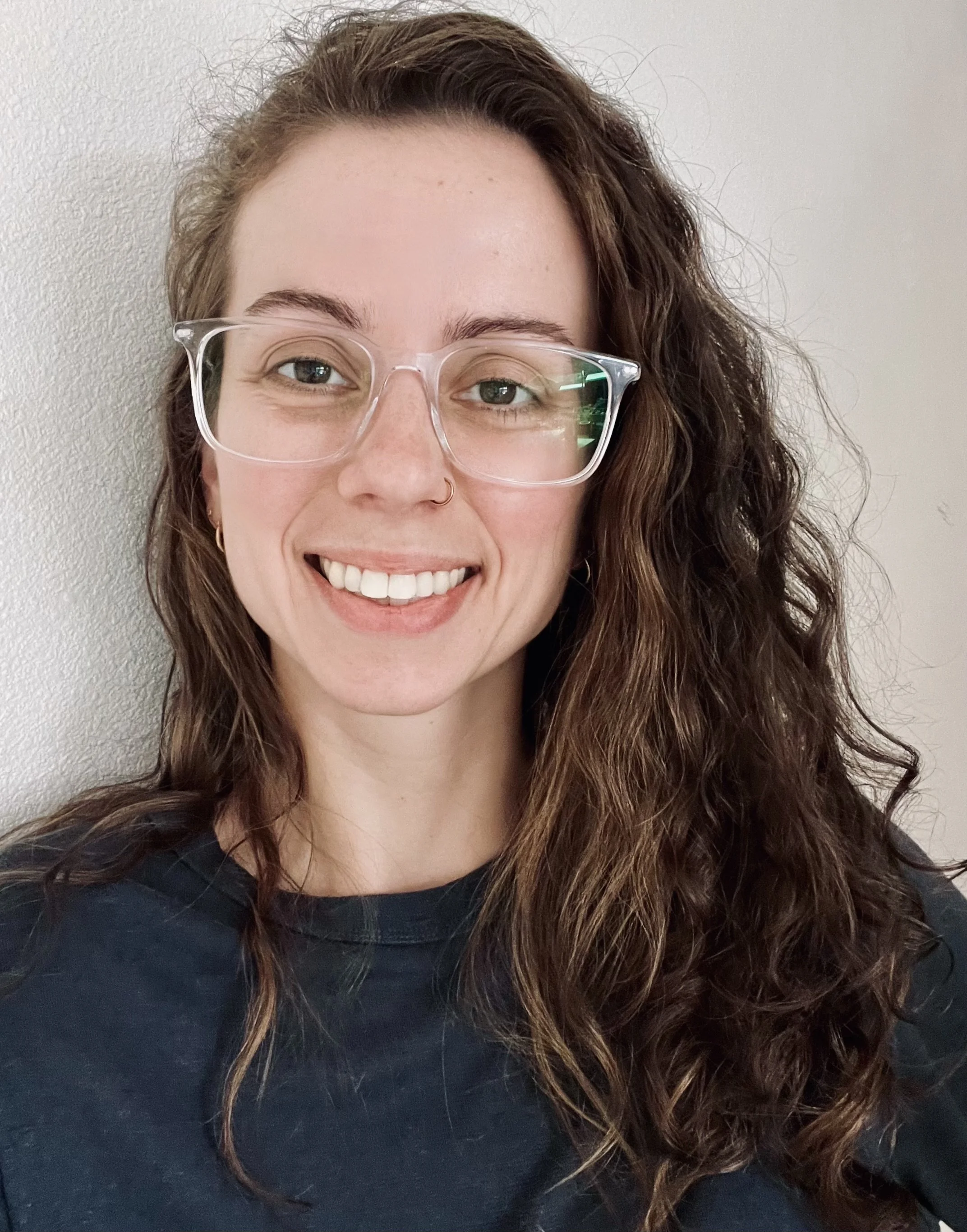
PhD, Community Psychology — specialization in wellbeing, systems-level research, and diverse populations.
14 years of applied research and consulting — spanning mixed-methods, program evaluation, organizational research, and research operations.
18 years studying (and applying) positive psychology and wellbeing — I’m obsessed, it’s my passion.
Peer-reviewed publications— in community psychology and wellbeing research.
Director-level research roles — at Advocates for Human Potential and Adept; senior roles at Portland State University and Homebase.
Harvard Business School — Leadership Principles certificate.
Compassion Institute — Compassion Cultivation Training.
Based in WA/OR — available for remote and in-person engagements nationally.
BACKGROUND
I began studying positive psychology (and psychology generally) nearly 20 years ago, and I’ve been hooked ever since.
After studying personality and abnormal psychology alongside wellbeing, I moved into supporting organizations with workforce development and becoming Deliberately Development Organizations, and otherwise supporting the personal development and effectiveness of individuals and small groups. That work shaped my passion for wellbeing in the workplace and beyond.
From there, I worked in community settings alongside people navigating homelessness, behavioral health challenges, workforce barriers, and systems that weren't built with them in mind. That work shaped how I approach data: with precision, yes, but also with an understanding that behind every data point is a person in a real context.
I've led statewide needs assessments, built research infrastructure from scratch, designed and analyzed survey programs for thousands of respondents, and translated complex findings for executive audiences who needed clarity, not jargon.
What's stayed constant across all of it: a belief that good research should serve the people it's about — not just the organizations funding it.
Throughout all of this, I’ve studied and practice in Buddhist and contemplative traditions and engaged in ongoing work supporting individual wellbeing across all areas of life. I’m deeply passionate about a holistic, integrated approach to wellbeing and supporting individuals with going beyond learning to actually applying the concepts in ways that change their lives for the better.
APPROACH
As mixed-methods researchers, we believe that numbers and narratives each reveal things the other can't, and that the best research uses both deliberately.
We tend to work closely with clients through the full research arc: from defining the right questions, to designing instruments that will actually measure what matters, to analysis, to an actionable report that lands in a room full of decision-makers who need to make decisions based on it.
We are direct, efficient, and honest about what the data can and can't support. We won't oversell a finding, and we won't bury a difficult result. Good research serves the work — even when it's uncomfortable.
Based in Vancouver, WA, with deep roots in the Pacific Northwest nonprofit and public health communities, we work remotely with organizations nationally.
Principles that guide the work:
Rigor is an act of respect.
Sloppy measurement doesn't just produce bad data — it disrespects the people whose lives the data is supposed to represent. We hold high methodological standards because the work demands it, while also adapting those standards to the context to get the best information we can, even when there are constraints.
Complexity deserves translation, not simplification.
Wellbeing is multidimensional. It resists easy answers. Part of my job is helping organizations and individuals hold that complexity while still being able to act on what they’re learning in meaningful ways.
Research should serve the people it's about.
Whether we’re working with a Fortune 500 HR team or a community nonprofit, I ask: who benefits from this research? Are we measuring what actually matters to them?
Honesty over comfort.
We will tell you what the data say — even when it complicates a narrative you'd prefer. That's what good research is for: not to confirm what you already think, but to show you something true. Then we get to the fun part: creative, actionable strategies for addressing the needs that the data show are there.
Select Publications & Presentations
Publications
Stewart, K., & Townley, G. (2024). A qualitative exploration of community supports, well-being, and goals during the COVID-19 pandemic among youth experiencing homelessness. In Schiff, R., Wilkinson, A., Cullingham, S., & Buccieri, K (Eds.), Pandemic planning and homelessness: Lessons from COVID-19. Canadian Observatory on Homelessness.
Stewart, K., & Godly-Reynolds, E. (2020). Evaluation of the SCRA Year-Long Mentoring Program and reflections from the first cohort.The Community Psychologist, 53(4).
Townley, G., Stewart, K., Greene, J., Petteni, M. (2020). Housing and food insecurity at Portland State University. Homelessness Research & Action Collaborative.
Stewart, K. & Townley, G. (2020a). Community and well-being: A qualitative study of how youth experiencing homelessness define community and its relations to their well-being. Journal of Community Psychology, 1-16.
Stewart, K. & Townley, G. (2020b). How far have we come? An integrative review of the literature on sense of community and well-being. American Journal of Community Psychology, 66(1-2), 166-189.
Stewart, K. & Townley, G. (2019). Intrapersonal and social-contextual predictors of psychological well-being among youth experiencing homelessness. Journal of Community Psychology, 47(4), 772-789.
Presentations
Stewart, K. (2026). Building Organizations that Sustain their People. Invited workshop at the Homeless Services Department (HSD) Provider Conference. Portland, OR.
Stewart, K., Natarajan, K., Simons, M., Thomas, J. (2024). Overcoming Barriers to a Thriving Homelessness System Workforce. Invited pre-conference institute at the Housing First Partners Conference, Atlanta, GA.
Stewart, K., et. al. (2022). Sustainable Building Week, October 2022: Sustainable Visions for the Future of Portland (Panel).
Zapata, M., Bates, L.K., Hines, M., Leickly, E., Townley, G., Stewart, K., Hardy, S., McKinney, K. (2021). Portland State University Homeless Research and Action Collaborative Housing Roundtable with Senator Jeff Merkley. August 16th, 2021.
Stewart, K. & Lehmer, A. (2021). Intersections of Behavioral Health and Housing Needs: Connecting Clients to Systems of Care. Training presented at the Crisis and Recovery Enhancement (CARE) Technical Assistance (TA) 2021 virtual conference, Listening, Learning and Leading: Anti-Racism in California’s Crisis Continuum of Care.
Townley, G., Stewart, K., Leikly, E., & Brott, H. (2021). Addressing Homelessness at Portland State and in the Broader Community. Invited presentation for the Applying Psychology Speaker Series at Portland State University, Portland, OR.
Zapata, M., Bates, L.K., Hines, M., Leickly, E., Townley, G., Stewart, K., Hardy, S., McKinney, K. (2021). Portland State University Homeless Research and Action Collaborative Housing Roundtable with Senator Jeff Merkley. August 16th, 2021.
Stewart, K. (2021). Lessons learned from community-based research and evaluation focused on effective solutions to homelessness. Symposium session presented at the Poster presented at the Society for Community Research and Action 18th Biennial Conference.
Stewart, K. (2021). Impacts of COVID-19 on the well-being and community supports of youth experiencing homelessness. Ignite session presented at the Society for Community Research and Action 18th Biennial Conference.